
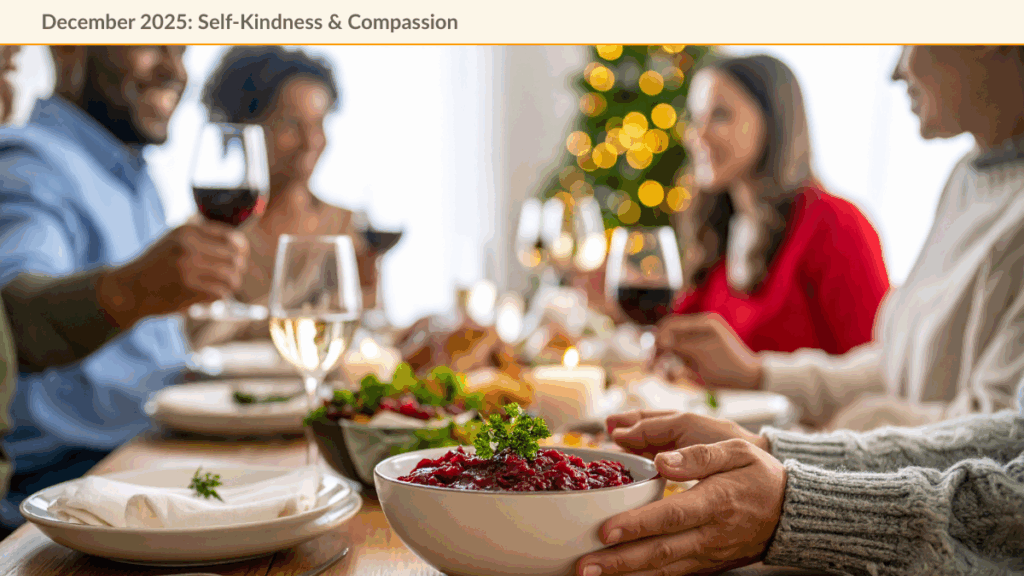
The holidays have their own rhythm, bright lights, full calendars, and tables overflowing with comfort and sweetness.
It’s joyful, but also a little overwhelming.
The same moments that warm us can leave us tired, foggy, or stretched thin.
This is where we take self-kindness from theory to practice.
Welcome back to The Month of Self-Kindness and Giving.
Each week this December, we explore one way to bring more calm, care, and connection into your life.
In Week 1, we explored the science behind how self-kindness strengthens your emotional balance and resilience.
This week, and in the weeks to come, we’ll move from theory to practice, turning that science into simple, everyday actions that help you feel more grounded and joyful throughout the season.
We begin with nourishment, bringing that kindness into the body, through healthy options for your Christmas treats, helping you feel grounded, even in the busiest month of the year.
Because what we eat doesn’t just feed our bodies, it directly shapes our mood, stress levels, and emotional steadiness.
And in a month where calm can feel like a luxury, food can be one of the simplest forms of self-care.
Nourishment shouldn't about rules or restriction.
It should be about self-kindness: choosing foods that support your nervous system while still letting yourself enjoy your favorites without guilt.
We’ll explore how to eat for calm and joy this holiday season, how to reduce the foods that heighten stress, embrace the ones that soothe it, and build small rituals that help you feel grounded, even when the dessert table is calling your name.
This week, we make self-kindness practical, physical, and delicious.
So let’s make this simple: eat what you love, but love yourself back through balance.
Start Your Day Calm: A Tiny Morning Ritual for Energy and Ease
I’ve always been an oats girl.
In my busiest years, oats were simply the fastest option, something I could throw together while rushing from one responsibility to the next.
But as I slowly began to rethink how I cared for myself, not just mentally, but physically, something shifted. I became more curious about how food affects energy, mood, and overall wellbeing. And without planning it, my oats evolved too.
Now they’re less of a shortcut and more of a self-care ritual.
My updated bowl is made with smaller portions of oats and water, but enriched with things that support how I want to feel:
• Hemp seeds and chia seeds for long-lasting steadiness (protein + omega-3s).
• A spoon of almond butter for healthy fats that help regulate mood.
• Blueberries and raspberries I picked myself, tiny bursts of antioxidants and joy.
• Cinnamon to help balance blood sugar.
• Roasted sunflower seeds, pumpkin seeds, and walnuts for nourishment and grounding.
It tastes like heaven.
But the biggest change isn’t the flavor.
It’s that it feels like care.
It sounds simple, but this small bowl has become one of my favorite parts of the day.
It feels like I’m giving myself something good before the world asks for anything from me.
What used to be a quick fix has become a moment I look forward to.
A reminder that nourishing myself doesn’t have to be complicated, just intentional.
If you’re interested in how small mindset shifts like this reshape your emotional balance, you’ll love The Science of Happiness: How Gratitude Helps You Feel Grounded This Season
The Food–Mood Connection: How What You Eat Shapes How You Feel
Modern nutritional science shows that what you eat over the holidays directly affects how you feel, mentally and emotionally.
When blood sugar spikes from too many sweet holiday treats, cortisol (your body’s main stress hormone) rises too, leaving you feeling anxious, tired, and irritable.
This is why balanced holiday eating isn’t about restriction, it’s about keeping your energy and mood steady so you can actually enjoy the season.
The Greek study on self-compassion and wellbeing found that people who practiced gentle daily nourishment rituals reported higher:
• life satisfaction
• emotional balance
• happiness
• resilience
even during stressful times like lockdowns. (And while Christmas stress isn’t quite that extreme, the principle still applies.)
Likewise, the University of Melbourne (Randhawa & Vella-Brodrick, 2025) found that compassionate, mindful eating habits significantly:
• reduced stress
• improved motivation and focus
• increased daily wellbeing
The biggest improvements came from small, consistent shifts, choosing foods that regulate your nervous system instead of spiking it.
These findings show that how you nourish yourself has emotional consequences far beyond the plate.
If you’d like to know more about nervous system regulation, you might also like The Art of Slowing Down: Micro-Pauses for a Calmer Mind.
What You Eat Matters
Refined sugar and highly processed holiday foods increase inflammation, which has been linked to higher anxiety and lower mood.
Omega-3 fats (in salmon, walnuts, flaxseed) lower cortisol and reduce symptoms of stress by up to 22%.
Magnesium-rich foods (like oats, spinach, and dark chocolate) help relax muscles and support restful sleep.
Starting your meal with fiber or vegetables can slow glucose spikes by up to 70%, keeping your energy — and emotions — more even through long festive days.
How You Eat Has a Big Impact
The Leibniz Institute for Resilience Research found that momentary self-compassion, small caring actions like preparing a warm meal or cup of tea, reduces emotional volatility and helps people recover from stress faster. Use this trick for busy days this season!
Warm, nourishing foods like soups, porridge, or roasted root vegetables activate the parasympathetic nervous system, your body’s natural “rest and restore” mode. Think of them as edible calm, grounding you in the middle of a busy holiday season.
When You Eat Matters Too
Emerging research on intermittent fasting shows that when you eat can influence mood, focus, and stress just as much as what you eat.
Giving your body longer breaks between meals allows cortisol and insulin levels to stabilize, reducing inflammation and supporting balanced energy throughout the day.
A review from the University of Illinois (2023) found that time-restricted eating, such as having your meals within an 8–10 hour window, improved emotional regulation, lowered perceived stress, and enhanced sleep quality.
The key is not strict restriction, but rhythm.
When your body knows when nourishment is coming, your nervous system relaxes, and your energy, digestion, and mood follow suit.
In short, your food choices can either fuel your stress or support your calm.
So how do we apply this to a season of treats and traditions?
It starts with one simple shift: approaching food not as a test of willpower, but as an act of self-kindness.
This December, let nourishment become an act of self-kindness, a way to care for both your body and your mood while still enjoying the Christmas magic.
Stay Calm and Bright: How to Let Your Food Work for You This Holiday Season
Think of your body like a string of Christmas lights.
When one bulb flickers, the whole strand dims.
That’s what happens when your energy and stress levels swing up and down, one small imbalance can affect the whole system.
Good nourishment act like the steady current that keeps your inner lights glowing through the dark winter days.
When you eat regularly and choose warm, nutrient-rich foods, a bowl of soup, roasted root vegetables, a handful of nuts, your body maintains more stable blood sugar and cortisol levels.
That stability helps your energy stay even, your mood steady, and your nervous system calm.
But when you skip meals, graze late at night, or rely on sugar and caffeine, your inner current flickers.
You might feel bright for a moment, then drained and irritable soon after.
During the holidays, we often pour our energy into creating light for others, baking, decorating, hosting, wrapping gifts.
But if you never pause to recharge your own current, your glow starts to fade.
Nourishment, in this sense, isn’t just food. It’s how you keep your system running smoothly, both physically and emotionally.
Maybe that looks like taking ten quiet minutes with a warm bowl of soup after a long afternoon of errands.
Or starting your morning with oats, fruit, and tea before the day begins.
It’s not about doing everything perfectly, it’s about giving your body the kind of steady fuel that helps you feel grounded through the season.
Because when you’re nourished and calm, your light naturally helps everyone else’s glow a little brighter too.
If you want your food to work with your body instead of against it this season, start small, the science says even one mindful choice a day helps.
Try This Today: 5 Nourishing Acts of Self-Kindness
Here are simple, evidence-based ways to support your wellbeing through food, without restriction, guilt, or overwhelm.
1. Add one grounding food to your breakfast
Examples: chia seeds, nuts, berries, yogurt, or oats.
Stable blood sugar in the morning supports steady energy and mood for up to six hours after eating.
2. Swap one holiday treat for a nourishing version you love
Try warm baked apples instead of cookies, dark chocolate instead of milk chocolate, or roasted nuts instead of candy.
Healthy fats and fiber slow sugar absorption by up to 50%, preventing the mood dips that follow sweet treats.
3. Start your day with a glass of water
Even mild dehydration can increase cortisol by 20–25%. A glass of water before coffee helps your body wake up calmly.
4. Eat one meal slowly, without screens
Mindful eating boosts digestion by improving vagus nerve activity, which lowers stress hormones and increases calm.
5. Finish eating at least two hours before bed
A short overnight fast helps balance blood sugar, supports deep sleep, and allows your body to reset overnight.
If you’d like small daily reminders of self-kindness, the Self-Love Advent Calendar is still running on Instagram Stories, one gentle micro-action each morning.
Key Takeaway
What you eat shapes how you feel.
Choose food that steadies your energy, and your body will thank you with calm and clarity.
Next Week
Next Monday, we’ll explore how kindness toward others becomes easier, and more meaningful, when you nurture yourself first.
It’s one of the most beautiful parts of December.
Full Self-Kindness & Compassion Series
Week 1: The Science of Self-Kindness: Why Being Gentle With Yourself Makes You Happier
Week 2: How to Enjoy Christmas Food Without the Crash: A Self-Kindness Guide to Stress-Less Eating
Week 3: The Season of Giving: How to Give in Ways That Fill You Up Instead of Wearing You Down
Week 4: The Gift of Presence: How to Slow Down and Truly Enjoy the Holidays
Week 5: How to Turn December Self-Kindness Into a Lasting New Year Intention